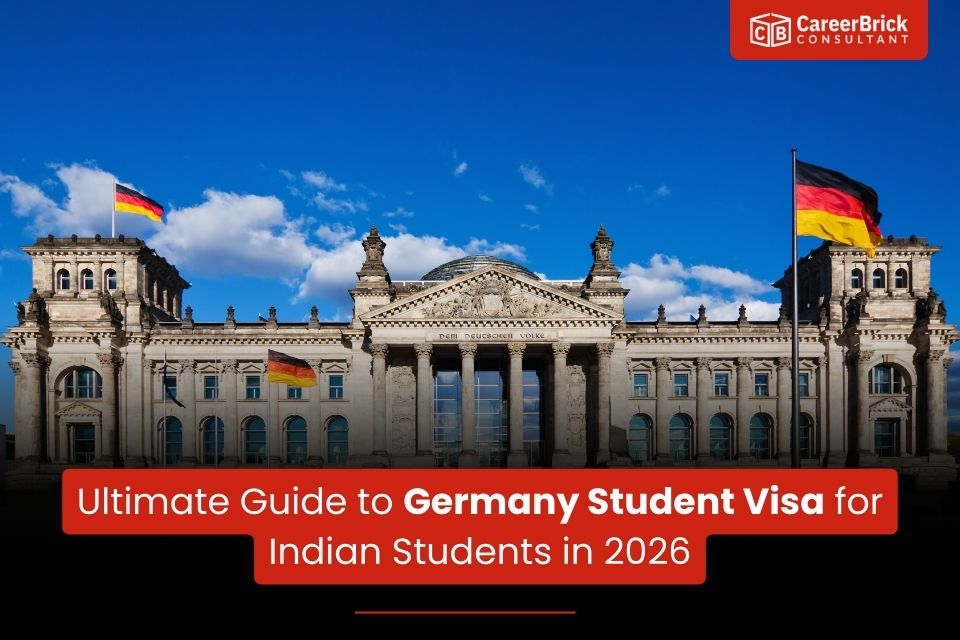
Are you an Indian student aspiring to pursue higher education in Germany? Securing a Germany student visa is a crucial milestone on your journey. At Career Brick, we're here to simplify the process for you. This comprehensive guide covers everything from visa types and eligibility to the application steps, required documents, fees, and post-arrival essentials. Whether you're heading to a top university or a language program, understanding these details will help you prepare effectively. Note: For programs in English, proving language proficiency (such as through tests like IELTS) is often key – we'll touch on that too.
Steps to Apply for a Germany Student Visa from India
Navigating the visa application can seem daunting, but breaking it down into clear steps makes it manageable. Here's how to get started:
- Secure Admission to a German Program: Begin by gaining acceptance into a recognized German university, language institute, or preparatory course. Your official acceptance letter is mandatory, as it confirms your purpose for studying in Germany. If you're still waiting for confirmation, you can apply for a prospective student visa with proof of your submitted applications.
- Locate the Nearest German Embassy or Consulate: Find the German diplomatic office in India that handles visa applications for your region. Jurisdictions vary, so check the official German missions website to ensure you're applying at the correct location.
- Book Your Visa Appointment: Appointments are required and can fill up quickly. Schedule yours online via the embassy's portal as soon as you have your documents ready. Be prepared for potential wait times, especially during peak seasons.
- Compile Your Documents: Gather all necessary paperwork in advance. This includes personal, academic, and financial proofs – we'll detail these below. Incomplete submissions can lead to delays or denials.
- Submit Your Application: Attend your appointment to hand in your documents, provide biometrics (fingerprints and photo), and participate in a short interview. Be honest and concise in your responses.
- Pay the Visa Fee: Settle the application fee at the time of submission. Details on amounts and payment options are covered later in this guide.
- Wait for Processing: Decisions typically take 15-30 days, but this can extend if more information is needed. Track your status through the embassy's system and respond promptly to any requests.
Eligibility Requirements for Indian Students
To qualify for a Germany student visa (Type D for long-term stays), you must demonstrate:
- An official acceptance letter from a German educational institution or preparatory program.
- Proof of financial stability to cover living expenses (at least €11,208 per year, equivalent to about ₹10,13,333).
- Valid health insurance for students, covering your stay in Germany.
These ensure you're prepared to focus on your studies without financial or health burdens.
Essential Documents for Your Germany Student Visa Application
Prepare two identical sets of the following documents – one original and one photocopy where specified. Always verify the latest requirements on the official German embassy website, as they can change.
- Completed Visa Application Forms: Fill out and sign two copies of the national visa form accurately.
- Valid Passport: Must be valid for at least three months beyond your planned return and have two blank pages.
- Passport Copies: Two A4-sized copies of the bio-data pages.
- Acceptance Letter: Original plus two copies from your German institution, specifying the program's language.
- APS Certificate: Mandatory for Indian applicants – obtain this Academic Evaluation Certificate from the Academic Evaluation Centre (APS) in New Delhi before your visa appointment.
- Recent Photographs: Three biometric-compliant photos (check specs: 35x45mm, white background).
- Academic Records: Originals and two copies of your qualifications, such as degrees and transcripts.
- Curriculum Vitae (CV): One copy outlining your education and any work experience.
- Financial Proof: Options include a blocked bank account confirmation, scholarship award letter, or a sponsor's guarantee with their financial details.
- Health Insurance: Proof of student-specific coverage from a recognized provider.
- Language Proficiency Proof: For English-taught programs, submit scores from accepted tests like IELTS (original certificate required). For German programs, equivalents such as TestDaF or DSH are needed.
Germany Student Visa Fees and Processing Time
The standard fee for a Germany student visa is €75 (approximately ₹6,781), with reduced rates for minors. Pay via cash, card, or demand draft as per the embassy's guidelines – fees are non-refundable. Processing usually takes 15-30 days, but factor in extra time for high-demand periods or if additional verification is required.
Understanding the Blocked Account and Next Steps After Arrival
To prove financial sufficiency, most students opt for a "blocked account" with at least €11,208 deposited (about ₹10,13,333 for one year). This restricts withdrawals to a monthly allowance (around €934) for living costs.
Once in Germany:
- Register your address at the local residents' office within two weeks.
- Activate your blocked account at a German bank.
- Secure or confirm your health insurance.
- Apply for a residence permit at the foreigners' authority, extending your stay beyond the initial visa validity.
Visa Validity, Extensions, and Work Rights
Your student visa is typically valid for 1-2 years, aligned with your program duration, and can be extended if needed. As an international student, you're allowed to work up to 120 full days or 240 half days per year without special permission. For more hours, seek approval from the employment agency. Note: A student visa doesn't automatically grant permanent residency – transition to a work visa post-graduation if you secure a job.
The Importance of English Proficiency for Your Application
If your course is in English, demonstrating language skills is essential. Tests like IELTS provide a benchmark for universities and visa authorities, showing you can handle academic demands. A solid score not only meets requirements but boosts your application's credibility and prepares you for success abroad.
Tips to Ace Your English Proficiency Test for Studying in Germany
Preparing for tests like IELTS? Here's how to excel:
- Know the Test Structure: Get familiar with sections on listening, reading, writing, and speaking.
- Practice Consistently: Use practice tests, apps, and resources to build skills daily.
- Build Core Skills:
- Listening: Tune into podcasts, news, and videos in varied accents.
- Reading: Dive into articles, books, and reports to speed up comprehension.
- Writing: Draft essays and get feedback on structure and grammar.
- Speaking: Record practice sessions and join conversation groups.
- Master Time Management: Simulate exam conditions to finish sections on time.
- Stay Calm and Prepared: Rest well before the test and approach it with confidence.
At Career Brick, we support your study abroad dreams with expert guidance. If you need help with applications, test prep, or career advice, reach out to our team in Delhi. Ready to build your future in Germany? Start your visa journey today!