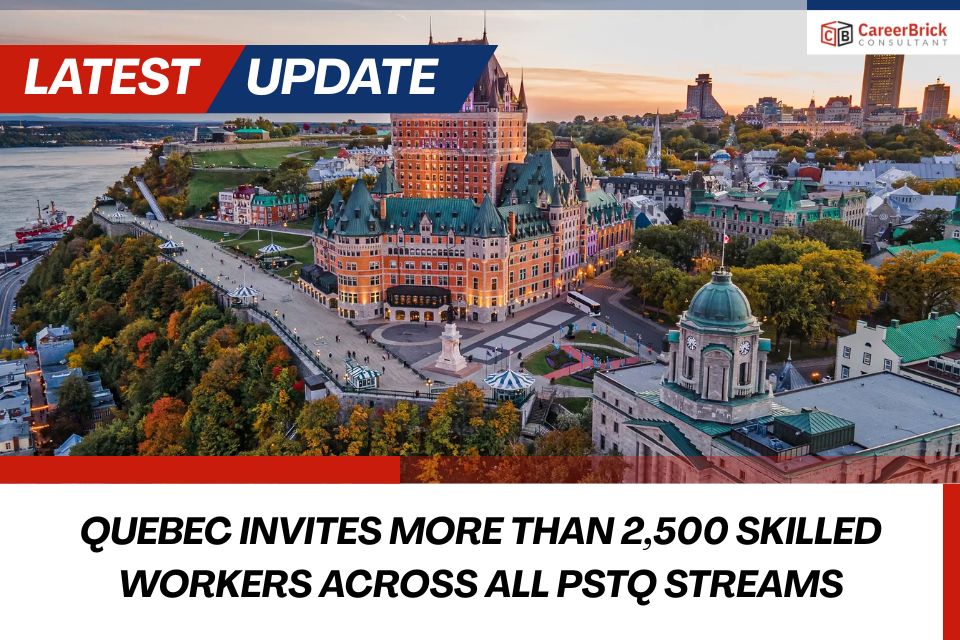
Quebec continues its aggressive recruitment of skilled talent, issuing 2,555 invitations on April 30, 2026, through all four streams of its Programme de sélection des travailleurs qualifiés (PSTQ), also known as the Skilled Worker Selection Program. This marked the province’s fourth selection round of the year under the Arrima system and demonstrates Quebec’s commitment to addressing labour market needs while prioritizing candidates already contributing in the province.
The invitations were distributed across four distinct streams: Highly Qualified and Specialized Skills, Intermediate and Manual Skills, Regulated Professions, and Exceptional Talent. Most targeted foreign workers already living and working in Quebec with at least 12 months of relevant experience. The PSTQ uses a points-based system that evaluates factors such as education, work experience, French language proficiency, age, and ties to Quebec.
Stream 1: Highly Qualified and Specialized Skills (983 Invitations)
This stream focused on TEER 0, 1, and 2 occupations and issued invitations through three separate exercises:
- Exercise 1 (Quebec Diploma): 379 invitations – Required a Quebec diploma of at least 900 hours (or 30 credits) and a minimum score of 716.
- Exercise 2 (Quebec Diploma + Priority Occupations): 354 invitations – Candidates needed their main occupation on the priority list plus a minimum score of 571.
- Exercise 3 (Quebec Diploma): 250 invitations – Required a minimum score of 704.
This stream targets professionals in managerial, professional, and skilled technical roles, rewarding both local education and experience in high-demand fields.
Stream 2: Intermediate and Manual Skills (506 Invitations)
Aimed at non-regulated TEER 3–5 occupations, this stream issued 506 invitations across three exercises for candidates with at least 12 months of Quebec work experience:
- Exercise 1 (Quebec Diploma): 153 invitations – Needed a qualifying Quebec diploma (minimum 600–900 hours depending on level) and a score of at least 660.
- Exercise 2 (Priority Occupations): 163 invitations – Main occupation on the priority list with a minimum score of 494.
- Exercise 3 (Minimum Score): 190 invitations – Required a score of at least 660.
This pathway supports essential workers in trades, manufacturing, and service roles that are critical to Quebec’s economy.
Stream 3: Regulated Professions (1,058 Invitations) – Largest Draw
The biggest share of invitations went to regulated professions, with 1,058 issued across six targeted exercises:
- Exercise 1 (Quebec Diploma): 226 invitations (minimum score 632)
- Exercise 2 (In-Demand TEER 0-2 Occupations): 723 invitations (minimum score 495)
- Exercise 3 (Physicians): 17 invitations – No minimum score; required authorization to practise in Quebec
- Exercise 4 (In-Demand TEER 3-5 Occupations): 10 invitations (minimum score 382 + French level 5)
- Exercise 5 (TEER 0-2 Occupations): 70 invitations (minimum score 625)
- Exercise 6 (TEER 3-5 Occupations): 12 invitations (minimum score 728 + French level 5)
This stream heavily emphasizes regulated healthcare roles, including physicians, and other licensed professions, reflecting strong demand in Quebec’s public services.
Stream 4: Exceptional Talent (8 Invitations)
Eight invitations were issued in this niche stream, which quadrupled the previous draw:
- Exercise 1: 2 invitations – Required a positive opinion letter from a MIFI partner and 36 months of experience.
- Exercise 2: 6 invitations – Needed documented exceptional achievement, doctorate-level education, and 36 months of experience.
Why This Round Matters
Quebec’s latest draw underscores its preference for candidates already integrated into the local workforce, particularly those with Quebec education, French proficiency, and experience in priority occupations. A successful invitation leads to a Quebec Selection Certificate (CSQ), which is a key step toward applying for Canadian permanent residence through federal channels.
With high volumes of invitations and varying score thresholds, competition remains strong but accessible for well-qualified candidates already in the province. Prospective applicants should ensure their Arrima profiles are up to date, verify eligibility against the latest criteria, and monitor official MIFI announcements closely, as draw patterns and priority lists can shift.
Quebec’s ongoing PSTQ activity provides valuable opportunities for skilled workers seeking to build their future in Canada’s second-largest province.