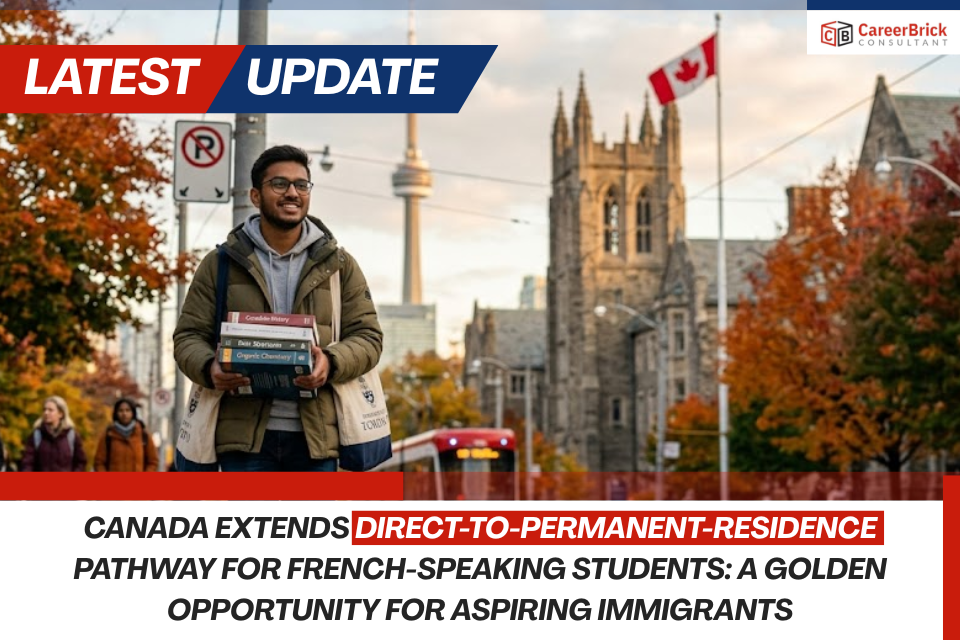
In a significant boost for international students aiming to build their future in Canada, the federal government has announced the extension of a specialized immigration pathway designed specifically for French-speaking candidates. This move underscores Canada’s commitment to strengthening Francophone communities outside Quebec and diversifying its immigration landscape. For students from French-speaking backgrounds or those proficient in the language, this development opens a more straightforward route to permanent residence without the traditional hurdles of job offers or highly competitive draws.
The Francophone Minority Communities Student Pilot (FMCSP), originally set to conclude in August 2026, will now remain open until August 2027. This extension provides additional time for eligible students to secure study permits and eventually transition to permanent residency. Launched in August 2024, the pilot program has already helped hundreds of students by offering a dedicated study-to-PR stream that bypasses some of the complexities of standard immigration routes.
Why This Pathway Stands Out
Unlike the conventional journey—where students typically move from a study permit to a Post-Graduation Work Permit (PGWP), gain Canadian work experience, and then apply through the Canadian Experience Class under Express Entry—the FMCSP simplifies the process dramatically. It allows qualifying graduates to apply for permanent residence directly after completing their studies, without needing a job offer. This is particularly advantageous in a competitive immigration environment where Express Entry scores can fluctuate and job market demands vary.
Another major benefit is the lower language proficiency threshold. The FMCSP requires only NCLC level 5 in French across all four abilities (reading, writing, listening, and speaking). In comparison, category-based Express Entry draws for French speakers often demand NCLC level 7, making this pilot far more accessible for many candidates.
This extension aligns with Canada’s broader objective of increasing the proportion of French-speaking permanent residents outside Quebec to 12 percent by 2029. By encouraging Francophone students to settle in provinces like Ontario, Manitoba, New Brunswick, and beyond, the program helps enrich cultural diversity and supports the vitality of minority French-speaking communities across the country.
The announcement was made on July 6, 2026, by Immigration Minister Lena Metlege Diab during a press conference in Winnipeg, Manitoba. While the government has not yet disclosed the exact study permit cap for the extended period from August 2026 to August 2027, previous years saw caps of 2,300 in the first year and 2,970 in the second, indicating strong demand and controlled growth.
Eligibility Criteria for the FMCSP Study Permit
To take advantage of this pathway, candidates must first obtain an FMCSP-specific study permit. Key requirements include:
- Being a citizen of one of the designated eligible countries. These include Benin, Burkina Faso, Burundi, Cabo Verde, Cameroon, Central African Republic, Chad, Comoros, Côte d'Ivoire, Democratic Republic of the Congo, Dominica, Republic of the Congo, Djibouti, Egypt, Equatorial Guinea, Gabon, Guinea, Guinea-Bissau, Haiti, Lebanon, Madagascar, Mali, Mauritania, Mauritius, Morocco, Niger, Rwanda, Saint Lucia, São Tomé and Principe, Senegal, Seychelles, Togo, and Tunisia.
- Living outside Canada at the time of application.
- Holding a letter of acceptance from a participating Designated Learning Institution for an eligible full-time post-secondary program outside Quebec. The program must last at least two years, with over 50 percent of instruction delivered in French, and lead to a diploma or degree. Importantly, the acceptance letter must explicitly reference the FMCSP.
- Demonstrating French language proficiency at NCLC 5 in all four skills.
- Proving sufficient funds to cover tuition and living expenses for yourself and any accompanying family members. The required amount for living expenses varies based on the size of the community where the main campus is located.
Additional steps may include providing a police certificate and undergoing a medical examination. Applications are typically submitted online, where applicants must indicate they meet the exception for provincial or territorial attestation letters.
Upon approval, successful candidates receive a Port of Entry letter of introduction, which they present upon arrival in Canada. They will also receive an electronic Travel Authorization or visitor visa as needed, with the study permit issued at the border once eligibility is confirmed.
Participating Designated Learning Institutions
Currently, there are 17 participating institutions spread across several provinces, offering programs at various campuses. These include Collège Boréal with multiple campuses in Ontario, Collège Communautaire du Nouveau-Brunswick, Collège de l’Île in Prince Edward Island, Collège Éducacentre in British Columbia, Collège La Cité and Université de l’Ontario in Ontario, Université de Moncton in New Brunswick, Université de Saint-Boniface in Manitoba, University of Alberta, University of Ottawa, University of Regina, York University’s Glendon campus, and several others. More institutions may join in the future, expanding options for students.
Transitioning to Permanent Residence
After completing the eligible program on an FMCSP study permit, graduates who reside in Canada outside Quebec with valid temporary resident status can apply for permanent residence. The application requires submitting all necessary documentation to demonstrate fulfillment of the program criteria.
Importantly, those who have finished their studies and applied for PR may also qualify for an FMCSP-specific open work permit. This allows them to work anywhere outside Quebec while their permanent residence application is being processed, providing financial stability and valuable Canadian work experience during the wait.
Strategic Advantages and Considerations
This pathway is especially appealing for students seeking long-term settlement in Canada. It reduces uncertainty by providing a clearer roadmap from study to permanent residence. For individuals from the listed eligible countries with strong French skills, it represents a faster and more predictable route compared to general streams that might involve lengthy Express Entry pools or provincial nominee programs.
Prospective applicants should carefully research programs at participating institutions to ensure they meet the French instruction threshold and duration requirements. Accurate documentation, proof of funds, and genuine intent to study are crucial for approval. Given the capped nature of the program, applying early within the intake periods is advisable.
Canada’s focus on Francophone immigration reflects its bilingual heritage and the need to support thriving French-speaking populations beyond Quebec. This extension not only benefits individual students by offering enhanced opportunities for education and settlement but also contributes to the economic and cultural fabric of Canadian society.
For education consultants and students navigating study abroad and immigration options, staying informed about such policy updates is essential. Programs like the FMCSP highlight Canada’s welcoming stance toward skilled and linguistically diverse talent, particularly those who can contribute to bilingual communities.
As the August 2027 deadline approaches, interested candidates should begin preparing their applications, exploring suitable programs, and strengthening their French proficiency if needed. With proper planning and guidance, this pathway can transform academic aspirations into a successful permanent move to Canada. Whether targeting fields in business, healthcare, technology, or the arts, the extended FMCSP offers a compelling reason to consider French-language education as a stepping stone to Canadian permanent residency.
This development reinforces Canada’s position as a top destination for international students seeking not just quality education but also viable long-term immigration prospects. Students and families exploring these opportunities should evaluate their eligibility thoroughly and prepare comprehensive applications to maximize their chances in this valuable pilot program. Success in such streams often depends on early preparation, accurate documentation, and alignment with program requirements. Families should also consider factors like living costs in different provinces, post-study work options, and community support for Francophone newcomers.
In summary, the extension of the Francophone Minority Communities Student Pilot until August 2027 creates an exciting window for French-speaking students worldwide. It combines accessible education with a direct path to permanent residence, making Canada an even more attractive choice for ambitious individuals looking to study, work, and thrive in a bilingual environment. Proactive steps today can lead to life-changing opportunities tomorrow.